
The phenomenon known as capacitor squeal/coil whine/odd noise coming from my PC has been a subject amongst electronic device owners for many years and is prevalent in the gaming PC industry. Confusingly the term capacitor squeal takes on more than one description and cause; we lift the lid on the entire subject.
 Now, they are usually hidden under a cover which looks good but also helps contain the noise given off.
 Once of the best techniques is to grab a straw or funnel and put it to your ear – it will help localise the area your straw/funnel is on blocking out much of the background noise.
More often than not said inductor/coil or capacitor is not found, but you will probably have a good idea what component has the noisy inductor/coil or capacitor. In a custom PC this would normally be a power supply, graphics card or motherboard.
Once of the best techniques is to grab a straw or funnel and put it to your ear – it will help localise the area your straw/funnel is on blocking out much of the background noise.
More often than not said inductor/coil or capacitor is not found, but you will probably have a good idea what component has the noisy inductor/coil or capacitor. In a custom PC this would normally be a power supply, graphics card or motherboard.
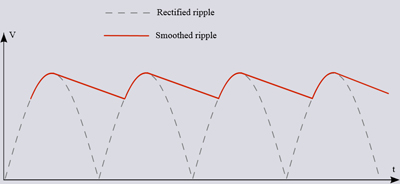
 The culprit 99% of the time is actually coil whine. There is a huge amount of science behind this but in short, you will find in coil in something like a transformer or conductor. The purpose of these transformers/inductors is to smooth out power delivery and filter power irregularity. Time for a simple picture to help explain;
 They more often than not work in tandem with capacitors and this is where the terms “capacitor squeal” and “coil whine” tend to get crossed over.
Simply put, the coils vibrate when current passes through them – it’s these minute vibrations that cause the whine. When a different amount of current passes through them they are vibrate at different speeds thus volume and pitch of this noise changes. Ever noticed that hum from a power substation station? It’s the same phenomenon. Every electronic device will suffer from coil whine to varying degrees and it is not an indication that the device is faulty, if anything; it’s an audible way of saying “I’m working”.
They more often than not work in tandem with capacitors and this is where the terms “capacitor squeal” and “coil whine” tend to get crossed over.
Simply put, the coils vibrate when current passes through them – it’s these minute vibrations that cause the whine. When a different amount of current passes through them they are vibrate at different speeds thus volume and pitch of this noise changes. Ever noticed that hum from a power substation station? It’s the same phenomenon. Every electronic device will suffer from coil whine to varying degrees and it is not an indication that the device is faulty, if anything; it’s an audible way of saying “I’m working”.
What is it?
In short it’s a high pitched squeal/whine/hiss/buzz noise emanating from a computer or electronic device. It can often be located towards a specific component such as a power supply or graphics card and the noise often changes volume and pitch especially when a certain task is carried out on a PC such as a high workload. Pretty much any electronic device is subject to it in some way or another but it doesn't necessarily mean that something is about to blow up.Finding the noise
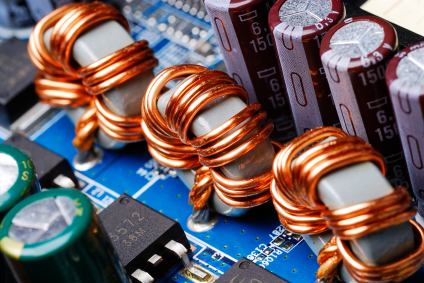
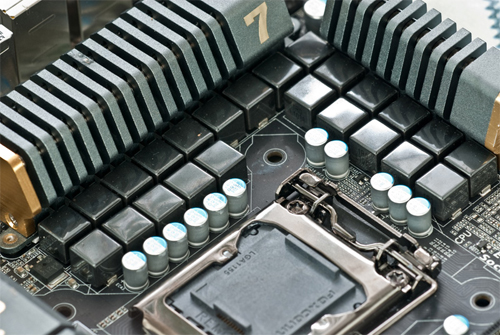
Common sense prevails here. You need to look and listen to locate the noise but it’s not always an easy task as the culprit maybe difficult to get to or covered by a cooler. What you are looking for is usually a capacitor or inductor/power coil. Capacitors haven’t changed much over the years but inductors have, back in the day the coil in the inductor was clear to see;
Now, they are usually hidden under a cover which looks good but also helps contain the noise given off.
Once of the best techniques is to grab a straw or funnel and put it to your ear – it will help localise the area your straw/funnel is on blocking out much of the background noise.
More often than not said inductor/coil or capacitor is not found, but you will probably have a good idea what component has the noisy inductor/coil or capacitor. In a custom PC this would normally be a power supply, graphics card or motherboard.
The Cause
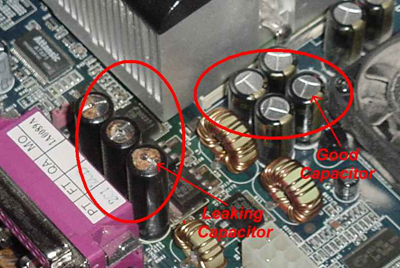
There are actually 2 causes; Capacitor Squeal is actually the noise heard when a capacitor is about to fail. Essentially it’s where gas is escaping through tiny holes in the capacitor and makes a “whistle” sound. You can usually visually spot this simply by looking at the top of the capacitor that’s making the noise – if bulging or you can see a brown fluid then this is a true capacitor squeal. Leaking capacitors don’t last long so by the time you have already read this article your device would have probably failed, thankfully this is the rarest occurrence of this phenomenon so don’t be too concerned.
The culprit 99% of the time is actually coil whine. There is a huge amount of science behind this but in short, you will find in coil in something like a transformer or conductor. The purpose of these transformers/inductors is to smooth out power delivery and filter power irregularity. Time for a simple picture to help explain;
They more often than not work in tandem with capacitors and this is where the terms “capacitor squeal” and “coil whine” tend to get crossed over.
Simply put, the coils vibrate when current passes through them – it’s these minute vibrations that cause the whine. When a different amount of current passes through them they are vibrate at different speeds thus volume and pitch of this noise changes. Ever noticed that hum from a power substation station? It’s the same phenomenon. Every electronic device will suffer from coil whine to varying degrees and it is not an indication that the device is faulty, if anything; it’s an audible way of saying “I’m working”.